
After rapid development during the 14th Five-Year Plan period, and following its first inclusion in the government work report in 2024 and formal designation as one of six future industries in the proposal for the 15th Five-Year Plan in 2025, China's bio-manufacturing industry has entered a critical phase of transformation—from quantitative growth to qualitative leap. According to data released at the 2025 Bio-Manufacturing Conference (Chongqing) on December 2025, the total scale of China’s bio-manufacturing industry reached 1.1 trillion yuan, with bio-fermentation product output accounting for over 70% of global production. Among these, two subsectors—food and additives, and biopharmaceuticals—each achieved annual output values exceeding 400 billion yuan. Li Boyang, Director of the Consumer Goods Industry Research Institute at CCID Consulting, noted that during the 14th Five-Year Plan period, the output value of bio-fermentation increased by approximately 20% compared to the end of the 13th Five-Year Plan, while emerging fields such as hyaluronic acid, polylactic acid, and synthetic starch have already achieved parity or leadership relative to developed countries. Meanwhile, China now accounts for over 20% of global publications and patent applications in the bio-manufacturing field, and has established a number of national key laboratories and industrial innovation platforms. In terms of investment environment, the financing scale in China’s bio-manufacturing sector grew to nearly 30 billion yuan annually in 2025, while global investments in synthetic biology manufacturing maintained an annual compound growth rate of about 30%, expected to reach around 25 billion USD by 2025. This article systematically outlines the latest developments in China’s bio-manufacturing industry across five dimensions: key segments of the industrial chain, core technological breakthroughs, deep integration with artificial intelligence, industrialization progress in five major application areas, and current bottlenecks along with national strategies to overcome them.
One,Key Links in the Biomanufacturing Industrial Chain
The biomanufacturing industry chain covers the entire process from upstream strain design and equipment manufacturing, to midstream fermentation production, and downstream application transformation. The coordinated development of these stages forms the foundation for high-quality industrial growth. According to data from the China Bio-Fermentation Industry Association, in the first half of 2025, the output of bio-fermentation products reached 16.46 million tons, an increase of approximately 4.7% year-on-year; exports amounted to about 4.49 million tons, up 3.3% year-on-year, indicating overall stable operations in the sector.
Overall, China's biomanufacturing industry chain exhibits a pattern characterized by "strong upstream and midstream capabilities, with downstream applications gradually expanding." In the upstream segment, both strain design and equipment manufacturing are rapidly catching up. The midstream fermentation production scale leads globally, while downstream applications continue to extend from traditional bulk products into high-value-added fields, with initial signs of clustering effects emerging. Regionally, the Shenzhen synthetic biology cluster has fostered one-third of all newly established synthetic biology enterprises nationwide and built major scientific infrastructure. The Suihua-Daqing biomanufacturing cluster leverages biomass resources to establish strengths in amino acids and fuel ethanol, achieving an annual output value exceeding 60 billion yuan. Meanwhile, Hainan and Qingdao have capitalized on their regional characteristics to develop marine biomanufacturing, driving significant growth through targeted initiatives such as marine biopharmaceuticals. This tailored, differentiated industrial development model lays a solid foundation for the sustainable growth of the biomanufacturing sector.
(1) Upstream: Strain design and equipment manufacturing
The upstream segment primarily involves the research and design of key microbial strains, as well as the manufacturing and supply of core equipment such as bioreactors and fermenters. In terms of strain development, with the rapid advancement of synthetic biology and gene editing technologies, China has largely established end-to-end R&D capabilities spanning gene discovery, component design, and cell factory construction. Regarding equipment manufacturing, bioreactors are central to biological manufacturing, and their technological level directly determines the efficiency and stability of fermentation processes. In recent years, China's bioreactor market has experienced rapid growth, with steady progress in domestic substitution. According to data from GEP Research’s "Global and Chinese Bio-Fermentation Equipment Industry Chain Comprehensive Analysis and Consulting Report (2025)", the global bio-fermentation equipment industry is growing exponentially, with the global market size projected to exceed $28 billion by 2025, of which China accounts for over 35%. In terms of competitive landscape, North America holds a technological lead, but the Asia-Pacific region is expanding production capacity at the fastest pace—between 2024 and 2025, China accounted for 42% of newly added bio-fermentation production lines globally. Large-scale fermenters are mainly used in industrial mass production settings, while small modular units are increasingly favored by research institutions and startups, with order volumes growing at an annual rate of 29%. In material innovation, the application ratio of specialty engineering plastics in stainless steel-based systems has risen to 22%. Notably, China continues to advance technological innovation in bioreactors. At the 2025 Bio-Manufacturing Conference, the Ministry of Industry and Information Technology released the "List of Selected Units for High-Performance Bioreactor Innovation Tasks," promoting domestic breakthroughs in critical equipment through a "tendered challenge" mechanism.
(2) Midstream: Fermentation Production and Process Optimization
The midstream segment serves as the "processing workshop" of bio-manufacturing, encompassing fermentation process development, process control, and large-scale production. Currently, China's bio-fermentation industry has established a relatively complete production system, with output volumes of major fermented products ranking among the world's top. In terms of industrial chain structure, upstream raw materials such as wheat, corn, and cassava are key feedstocks; the midstream focuses on the manufacturing of bio-fermentation products; while downstream applications are primarily concentrated in animal feed, food, and chemical industries. Regarding green development, the sector is actively promoting energy-saving and consumption-reducing technologies, gradually reducing reliance on grain crops like corn at the raw material stage, and advancing the industrial utilization of non-grain biomass such as crop straw—aligning well with the requirements of the "dual carbon" strategy. In smart manufacturing, AI-driven fermentation control systems are being progressively adopted, helping to address issues such as contamination and high energy consumption in traditional production processes, thereby improving overall efficiency.
(3) Downstream: Application Transformation and Market Expansion
The downstream segment represents the "last mile" for biomanufacturing innovations to transition from laboratories to the market, covering diverse end-use sectors such as food, pharmaceuticals, chemical materials, green energy, and daily consumer goods. It directly determines the industry's market value and commercial viability. Currently, China's downstream biomanufacturing applications are showing a diversified development trend. The food and additives sector, along with biopharmaceuticals, each generates over 400 billion yuan in annual output, forming the core pillars of the industry. In the field of new materials, independently developed long-chain dicarboxylic acid products are widely used in high-performance materials such as aerospace and advanced textiles. Additionally, various protein production routes—including yeast protein and fungal protein—have achieved industrialization, while artificial starch synthesis has also made pioneering breakthroughs in commercial application. In emerging high-value-added areas, subsectors like bio-based plastics and bio-based chemicals are experiencing rapid growth.
II. Overview of Industrialization in the Five Major Application Areas of Bio-manufacturing
The applications of bio-manufacturing are expanding from traditional sectors such as pharmaceuticals and food to broader industries including chemical materials, green energy, and daily consumer goods and cosmetics, forming an industrial landscape characterized by coordinated development across multiple fields.
Overall, China's five major application areas in bio-manufacturing are developing along the pattern of "healthcare leading, food stable, materials emerging, energy accumulating, and cosmetics expanding." The healthcare sector is experiencing rapid value release due to accelerated approvals of innovative drugs, making it currently the highest-value segment in bio-manufacturing applications. The food and agriculture sector holds the largest market share and continues to grow steadily. The chemical materials sector is growing at the fastest pace, rapidly rising through bio-based substitution pathways. The green energy sector remains in the early stages of industrialization, focusing on technology validation and pilot demonstrations, but shows significant medium- to long-term growth potential. Meanwhile, the personal care and cosmetics sector is steadily expanding its market size through product innovation driven by bioactive ingredients.
(1) Healthcare sector
The accelerated launch of innovative drugs is ushering in a harvest period for commercialization. Healthcare remains the most core and high-value application area for biomanufacturing. According to data from the "China Industrial Biotechnology Development White Paper 2025," total investment in biomanufacturing reached approximately 28 billion yuan over the past year, with pharmaceuticals and health sectors accounting for over 15 billion yuan—more than half of the total—ranking first among all subsectors. In 2024, China approved 48 new Category 1 innovative drugs, more than five times the number in 2018. In the first half of 2025, domestically developed innovative drugs accounted for as high as 93% of all approvals, reflecting an explosive surge in drug launches. In terms of innovation quality, the share of first-in-class (FIC) drugs has risen from less than 10% in 2015 to around 30% in 2024, while China's global share of first-to-market new drugs increased from 4% to 38%. China is rapidly transforming from a major pharmaceutical producer into a global leader in pharmaceutical innovation. On the commercialization front, several innovative drug companies have already turned profitable in the first half of 2025, marking the beginning of a rewarding phase. In cutting-edge fields such as cell and gene therapy, China has approached international advanced levels in technologies like CAR-T cell therapy and gene editing, with some products achieving global first-in-market approval.
(2) Food and Agriculture Sector
The industrialization of alternative proteins and novel foods is accelerating. Food and agriculture represent the most vital application area of bio-manufacturing, and are among the fastest-growing sectors in emerging markets. In the field of alternative proteins, various technological pathways—including yeast protein, fungal protein, and Clostridium protein—have already achieved industrial scale, while artificial synthetic starch has made a pioneering breakthrough in commercial production worldwide. In food additives and functional ingredients, fermentation-based products such as amino acids, vitamins, and enzyme preparations continue to expand in output, with microbial fermentation technology for hyaluronic acid reaching internationally leading levels. In agriculture, advancements in bio-breeding and microbial fertilizers offer new technical solutions for ensuring food security and promoting sustainable agricultural development.
(3) Chemical Materials Field
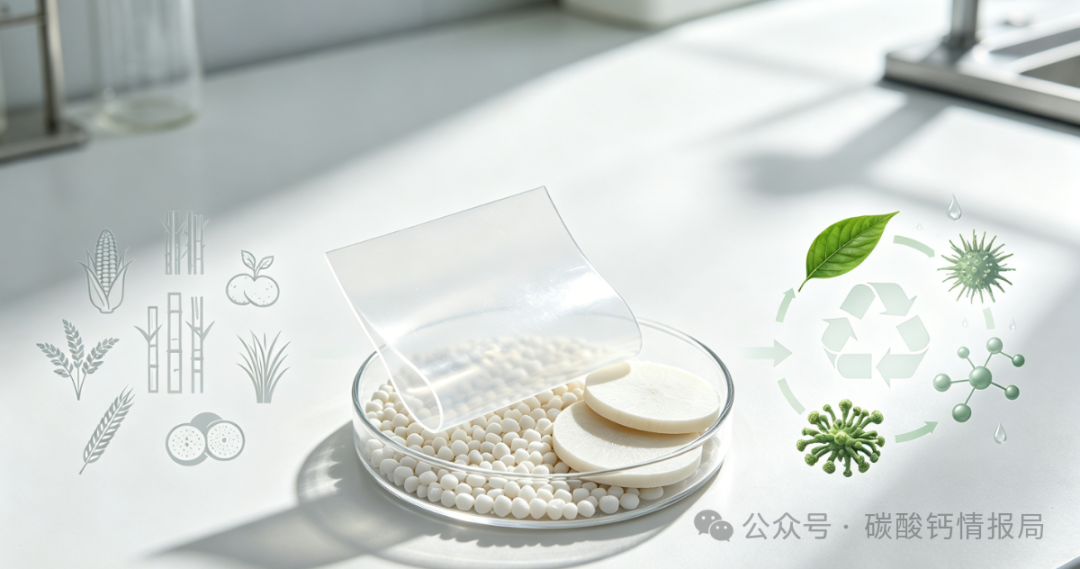
The market size of bio-based materials has surpassed 120 billion yuan. Chemical materials represent the core arena for biomanufacturing to achieve "replacing petrochemicals with biology." According to industry market analysis reports, China's bio-based materials market is expected to exceed 120 billion yuan by 2025, with an annual growth rate of 18.7%, a non-grain feedstock substitution rate rising to 40%, and the penetration rate of bio-based chemicals in petrochemical products surpassing 20%. Bio-based materials offer significant carbon reduction advantages throughout their lifecycle, reducing carbon emissions by 30% to 70% compared to petroleum-based materials. In specific products, China's independently developed series of long-chain dicarboxylic acids have been widely applied in high-performance material fields such as aerospace and advanced textiles; production capacity of bio-degradable plastics like polylactic acid (PLA) continues to expand, with the Chinese bio-plastics market estimated at around 43 billion yuan by 2025; and output and technological capabilities in bio-based fine chemicals such as hyaluronic acid rank among the world's leading levels. From the perspective of industrial clusters, a bio-based materials industrial belt centered on the Yangtze River Delta is rapidly taking shape, while the Shenzhen synthetic biology cluster and the Suihua-Daqing biomanufacturing cluster have each established distinctive competitive advantages along different technological pathways.
(4) Green Energy Sector
Biofuels and non-food feedstock substitution are advancing rapidly. Green energy is a key area for biomanufacturing to achieve energy transition and carbon reduction goals. In the field of biofuels, products such as fuel ethanol, biodiesel, and bio-based aviation kerosene are gradually being industrialized. Waste cooking oil, after undergoing hydrodeoxygenation treatment, can be converted into aviation fuel; biomass resources like corn are processed into fuel ethanol to support the aviation industry's emission reduction targets. Regarding non-food feedstock alternatives, in recent years the government has significantly increased research and development support for pathways such as cellulosic ethanol and straw-based sugar production, with some technologies already entering pilot-scale and demonstration stages. The one-carbon bioproduction technology based on Methylobacillus developed by the Tianjin Institute of Industrial Biotechnology, Chinese Academy of Sciences, enables direct biosynthesis using methanol produced at scale from carbon dioxide, offering an entirely new technological pathway for non-food feedstock replacement in the energy sector.
(5) Personal Care and Beauty Industry
Biomanufacturing is driving the upgrade of the beauty industry. Personal care and cosmetics represent one of the most consumer-oriented emerging applications of biomanufacturing. Microbial fermentation technologies for producing bioactive ingredients such as hyaluronic acid, recombinant collagen, and peptides have become increasingly mature, with expanding application scenarios. A group of companies, led by Huaxi Biotechnology, leverage synthetic biology platforms to focus on the research, development, production, and sales of bioactive substances including functional sugars, proteins, peptides, and amino acids. The company has invested in building the world's largest pilot-scale synthetic biology platform (located in Binhai New Area, Tianjin, covering 44,000 square meters with 64 pilot production lines), which now spans three core sectors: cosmetics, food additives, and biopharmaceuticals. In the personal care and cosmetics segment, it has established a complete industrial chain capability—from raw material R&D to product application. As consumer preference for "natural," "green," and "bio-based" products continues to grow, the penetration rate of biomanufacturing in the personal care and cosmetics sector is expected to further increase.