
Biological manufacturing refers to a new manufacturing model that utilizes living organisms such as microorganisms, cells, or enzymes as "factories", using renewable resources like straw and carbon dioxide as raw materials to produce food, feed, and materials. It possesses the characteristics of being green, low-carbon, and efficient. By 2025, the total scale of China's biological manufacturing industry had reached 1.1 trillion yuan, with the agricultural food-related sector accounting for a significant share, profoundly influencing every aspect from the field to the dining table.
I. Strategic Positioning: Future Industries
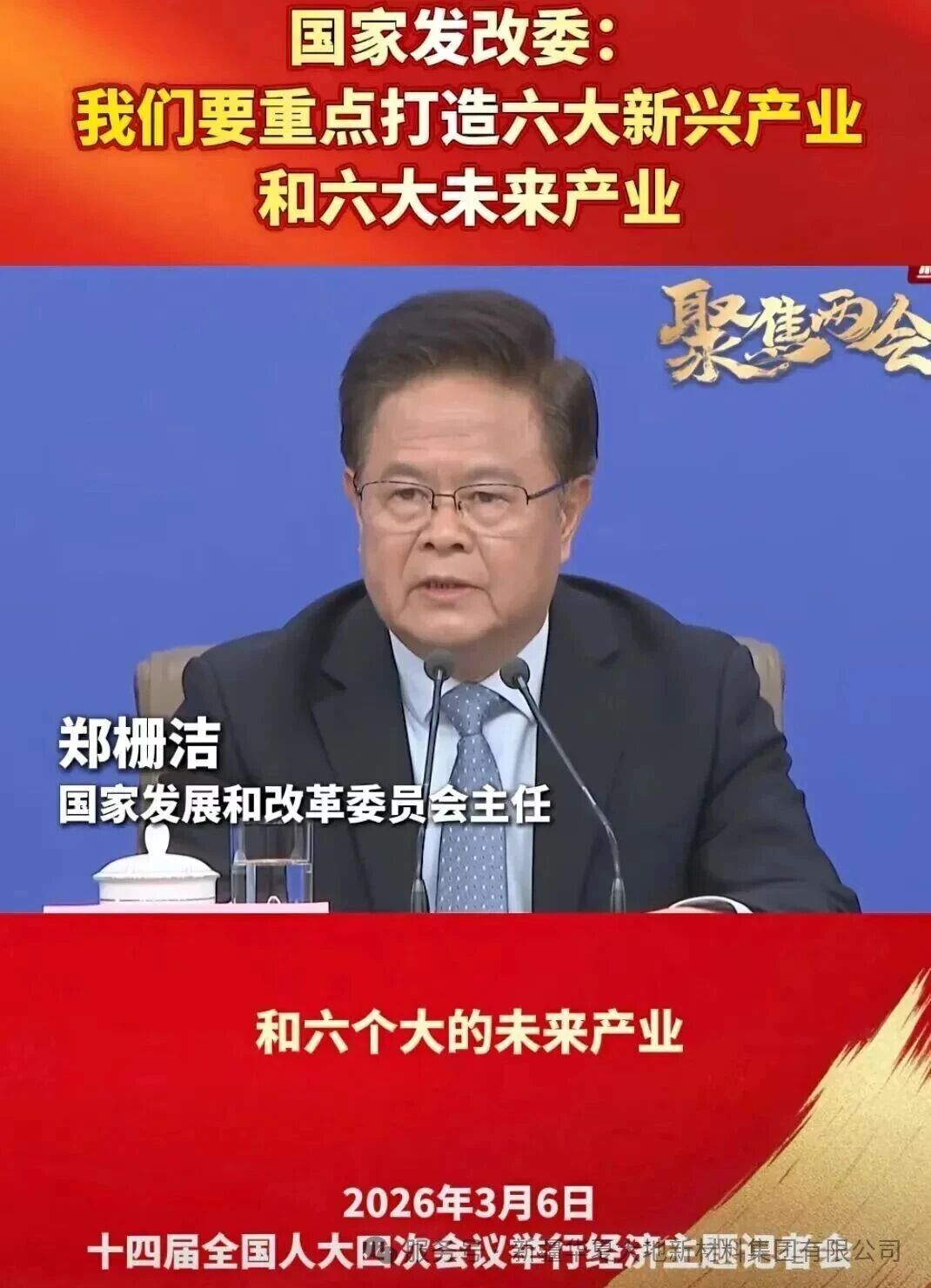
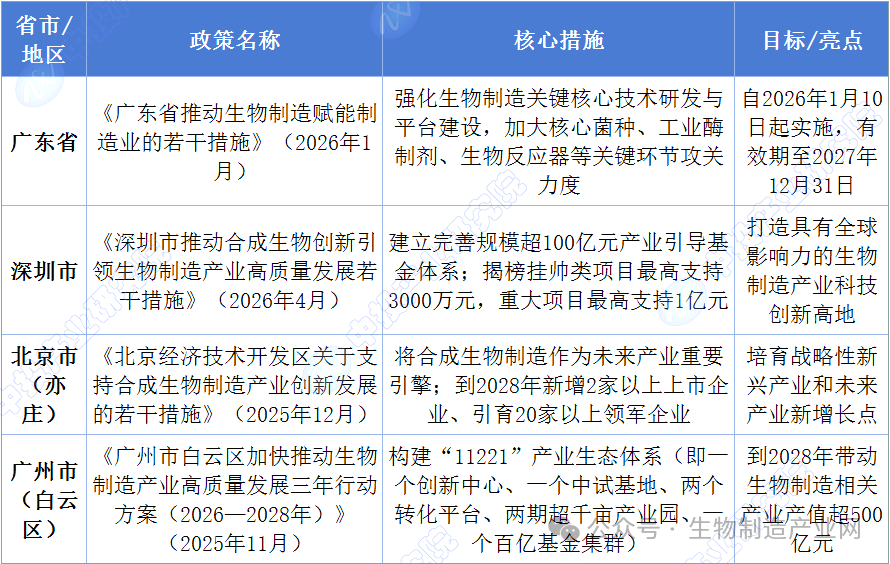
In recent years, the central government's policy support for biomanufacturing has shown a stepwise increase. In the 2024 Government Work Report, it was explicitly stated as a "new growth engine". In the "14th Five-Year Plan" proposal, biomanufacturing was listed as a future industry. This is a dual positioning in the top-level design, clearly indicating that it has risen to the core of the national strategy.
For the agricultural food sector, this means that biomanufacturing is highly anticipated: it can not only open up new paths for "future food" through technologies such as synthesizing starch and microbial protein, thereby ensuring food security; but also promote the green transformation of agriculture through biological fertilizers and biological pesticides.
II. Market Scale: Targeting the Global Hub
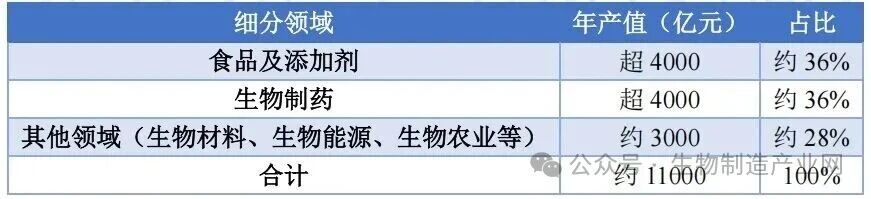
According to data from the Ministry of Industry and Information Technology, by 2025, the total scale of China's bio-manufacturing industry will reach 1.1 trillion yuan. Among this, the output of bio-fermentation products will account for over 70% of the global total, and the production of bulk products such as amino acids and organic acids will remain the world's largest.
In terms of specialized fields, thanks to the deep penetration of synthetic biology technology in sectors such as functional foods, sweeteners, and probiotics, as well as the continuous increase in demand for health products in the downstream consumer market, food and additives have become one of the most mature directions in the industrialization of bio-manufacturing. The annual output value exceeds 400 billion yuan, and together with the biopharmaceutical sector, they constitute the two main pillars of the industry.
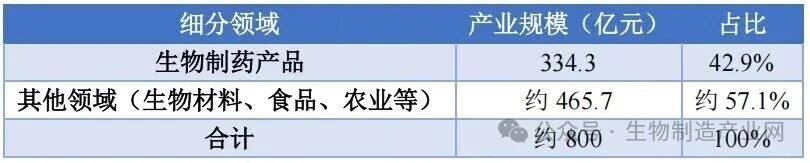
As a cutting-edge field of biomanufacturing, synthetic biomanufacturing is entering a period of rapid growth. According to the "China Synthetic Biomanufacturing Industry" report released by CSDI, the scale of China's synthetic biomanufacturing industry has approached 80 billion yuan in 2024, and is expected to approach 100 billion yuan in 2025. The growth rate has remained above 25% in the past three years. It is predicted that the scale will exceed 100 billion yuan in 2026 and reach 170.37 billion yuan in 2027.
According to the prediction of Yike Capital, by 2030, the scale of China's biomanufacturing market will further increase to 1.8 trillion yuan, accounting for nearly 25% of the global market size. At that time, China will become one of the global centers for biomanufacturing. From a broader perspective, it is predicted that by 2050, global biomanufacturing is expected to generate 30 trillion US dollars in economic value, accounting for one-third of the global manufacturing industry.
III. Capital Flows: Trend Continues to Rise
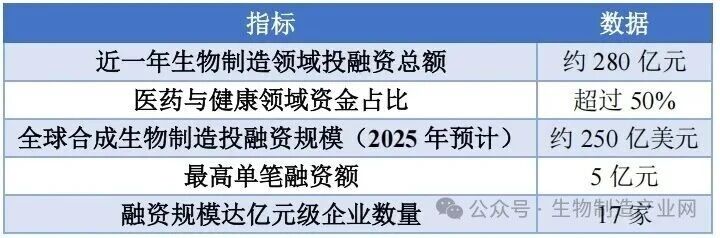
In 2025, the investment and financing market in China's biomanufacturing sector will exhibit distinct characteristics of "total recovery, structural optimization, state-owned capital leading, and focused direction". According to the "White Paper on the Development of Industrial Biotechnology in China 2025", the investment and financing market in China's biomanufacturing sector is quite active. The total investment and financing amount in the biomanufacturing sector in 2024-2025 was approximately 28 billion yuan, and the funds attracted from the pharmaceutical and health sectors accounted for more than half. At the same time, emerging fields such as bio-materials, fermented protein foods, and bio-based chemicals have also become hotspots for capital competition.
From a global perspective, since 2015, global investment and financing in synthetic biology manufacturing has maintained a compound annual growth rate of approximately 30%. By 2025, it is expected to reach around 25 billion US dollars. The investment and financing scale in China has grown to nearly 30 billion yuan per year.
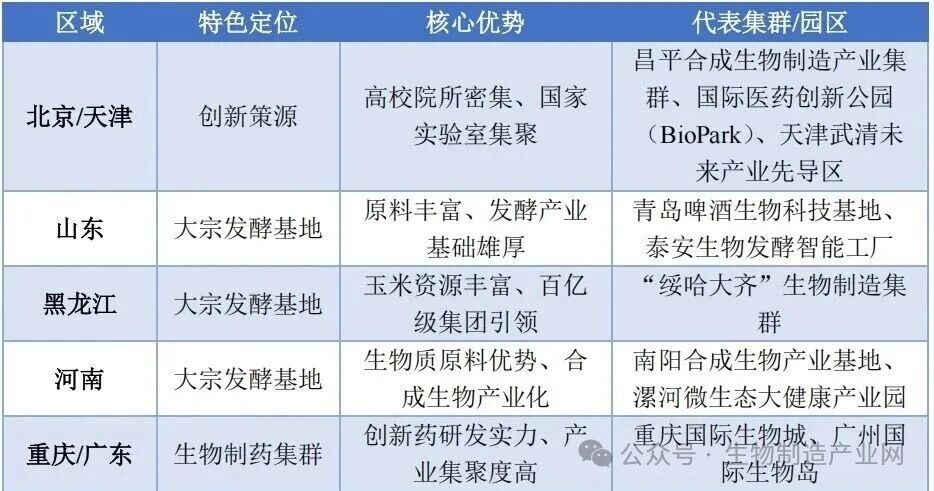
The regional layout of China's biomanufacturing industry has taken on a pattern of "multiple blossoming, distinct characteristics, and differentiated development". The Ministry of Industry and Information Technology disclosed: "Beijing, Tianjin, and other regions, leveraging the advantages of universities and research institutions, have become the innovation hubs for biomanufacturing. Shandong, Heilongjiang, Henan, etc., have formed manufacturing bases for bulk biological fermentation products by taking advantage of their raw material resources. Chongqing and Guangdong have prominent comparative advantages in biopharmaceuticals, and original achievements keep emerging."
IV. Comprehensive Overview of the Industrial Chain: Strong in the Upstream and Midstream, Expanding in the Downstream
The biomanufacturing industry chain in our country has taken shape with a pattern of "strong upstream and midstream, and gradually expanding downstream applications": the upstream strain design and equipment manufacturing have rapidly caught up, the midstream fermentation production scale leads globally, and the downstream applications have extended from traditional bulk products to high-value-added fields, with a preliminary manifestation of cluster effects. According to data from the China Bioprocessing Industry Association, in the first half of 2025, the output of bioprocessing products reached 16.46 million tons, increasing by 4.7% year-on-year; the export volume was approximately 4.49 million tons, increasing by 3.3% year-on-year, and the industry operated stably.
Upstream: Bacterial strain design and equipment manufacturing
The upstream covers the research and design of microbial strains as well as the core equipment manufacturing such as bioreactors and fermentation tanks. In terms of microbial strain design, China has established a complete process of research and development from gene discovery, component design to cell factory construction. In terms of equipment manufacturing, the bioreactor is the core equipment. According to GEP Research data, the global market size of biological fermenters is expected to exceed 28 billion US dollars in 2025, with China contributing more than 35%. From 2024 to 2025, China's new fermentation line production accounts for 42% of the global total, the annual growth rate of small modular equipment orders reaches 29%, and the application proportion of special engineering plastics has risen to 22%. In 2025, the Ministry of Industry and Information Technology will promote the breakthrough of domestic production of high-performance bioreactors through the "challenge-and-award" mechanism.
Midstream: Fermentation Preparation and Process Optimization
The midstream stage involves the development of fermentation processes, process control, and large-scale production. China ranks among the world leaders in the production of major fermented products, using raw materials such as wheat, corn, and cassava. The downstream applications mainly lie in the fields of feed, food, and chemicals. The industry is promoting energy-saving and consumption-reducing technologies, promoting the utilization of non-grain raw materials like straw, and AI-driven fermentation control systems have also begun to be applied, which helps solve problems such as contamination and high energy consumption.
Downstream: Application Transformation and Market Expansion
The downstream stage is the "last mile" for the products to reach the market, covering fields such as food, medicine, chemical materials, green energy, and personal care products. The annual output value of food and additives, as well as biopharmaceuticals, exceeds 400 billion yuan, forming the backbone of the industry. Yeast protein, fungal protein, and artificial synthetic starch have been industrialized, and emerging sectors such as bio-based plastics and bio-based chemicals have seen rapid growth.
V. Application Areas: Industrialization Implementation Status
The five major application fields of biomanufacturing in our country have presented a development pattern of "medical leadership, food stability, material rise, energy potential accumulation, and beauty expansion". Among them, the medical field has the highest value, with innovative drugs accelerating their market launch; the food field is the largest in scale, with stable growth; the materials field has the fastest growth rate, with the rapid rise of bio-based substitution; the energy field is in the stage of technical verification, with huge potential in the medium and long term; the beauty field, relying on the innovation of bioactive substances, is steadily expanding its market.
Food and Agriculture Sector: The Process of Developing Alternative Proteins and New Food Products Accelerates
Food agriculture is the application field with the most people-oriented attributes in biomanufacturing, and it is also one of the sectors with the fastest growth in emerging fields. In the direction of alternative proteins, various technical routes such as yeast protein, fungal protein, and clostridium protein have achieved industrialization, and the artificial synthesis of starch has achieved the first industrial breakthrough worldwide. In the direction of food additives and functional ingredients, the production volume of amino acids, vitamins, enzyme preparations, etc. produced by fermentation continues to expand, and the microbial fermentation production technology of hyaluronic acid has reached the international leading level. In the agricultural field, the development of biotechnology breeding and microbial fertilizers has also provided new technical means for ensuring food security and sustainable agricultural development.
Green energy sector: Accelerated advancement of biofuels and non-food raw material substitution
Green energy is an important field for achieving energy transition and carbon reduction goals through biomanufacturing. In the field of biofuels, products such as fuel ethanol, biodiesel, and biojet fuel have gradually been put into industrial application. "Waste cooking oil" can be converted into aviation fuel after hydrogenation and deoxygenation treatment; biomass resources such as corn are processed into fuel ethanol to serve the emission reduction goals of the aviation industry. In terms of non-food raw material substitution, in recent years, the country has increased its research and development support for non-food raw material routes such as cellulose ethanol and straw sugar production, and some technologies have entered the pilot and demonstration stages.
VI. Bottlenecks and Solutions: Pilot Testing, Equipment, and Raw Materials
Although the biomanufacturing industry in China has developed rapidly, it still has shortcomings in aspects such as pilot-scale production, core equipment, and raw material routes. Breaking through these bottlenecks is a strategic priority for the "14th Five-Year Plan" period.
Pilot-scale expansion of "Death Valley"
For the laboratory research results to be industrialized, they need to go through the pilot production stage. The success rate of industrialization after going through the pilot production is 80%, while it is only 30% for those that haven't. The difficulty lies in the complexity of the life system. To address this, the country has set up the first batch of 43 pilot production platforms, covering 25 provinces and cities. Among them, 5 platforms have been rated as five-star.
High-end equipment relies on imports.
Although China has strong manufacturing capabilities in the mid-to-low-end fermentation tank sector, the high-end bioreactors and key sensors are still dominated by Europe and the United States, with a low domestic production rate. In response to this, the Ministry of Industry and Information Technology has initiated the "challenge and award" mechanism to promote the research and development of high-performance bioreactors.
Dependence on food as raw materials
Currently, the main products are grains such as corn and wheat, and there is a pressure of "competing with humans for food". In June 2025, the Ministry of Industry and Information Technology and the Ministry of Agriculture and Rural Affairs jointly recommended typical cases of non-grain bio-based materials, promoting the industrialization of technologies such as sugar production from straw and cellulosic ethanol. In addition, the one-carbon raw material route is also a very promising direction.