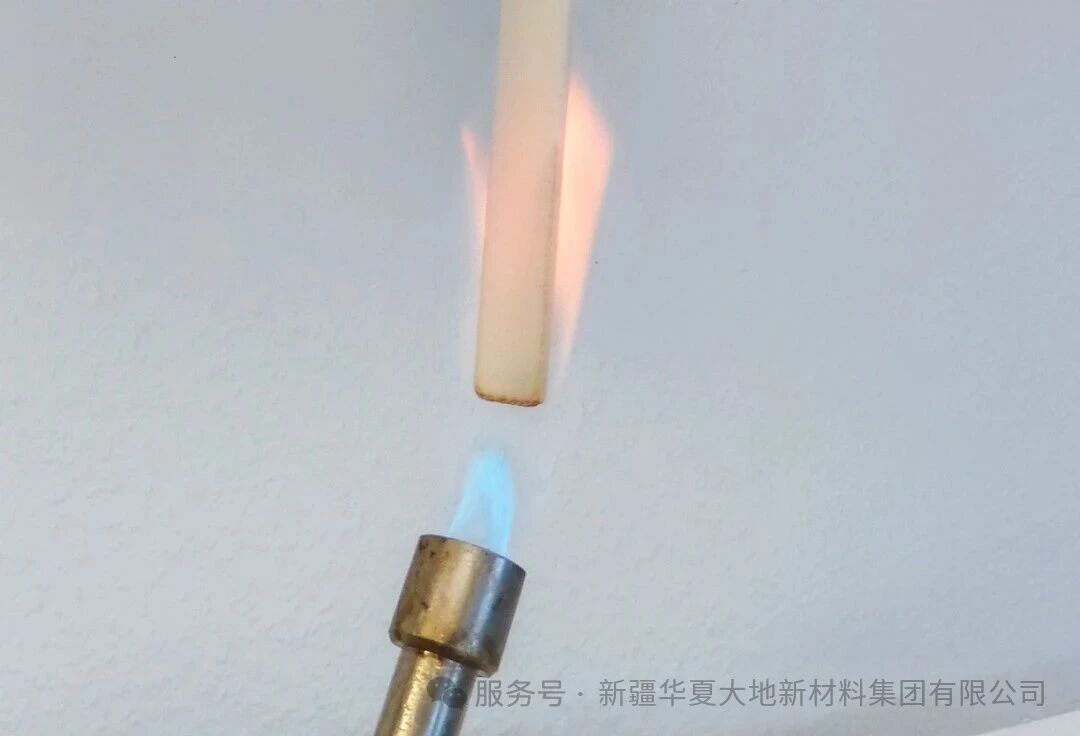

Against the backdrop of the deepening advancement of the "dual carbon" goals and the continuous efforts of the "solid waste revolution", fully biodegradable plastics, as a core alternative solution for plastic pollution control, are transitioning from "encouraged use" to "mandatory promotion" in accordance with the law. With the continuous improvement of domestic policy systems, the comprehensive upgrade of international green rules, and the acceleration of technological innovation and the explosive growth of market demand, the fully biodegradable plastics industry has entered a high-quality development window period driven by policy, technology and market, and has become a core track in the wave of green transformation.
Domestic policies continue to intensify, and the industry's development has entered a new stage of standardization.
In recent years, China's ecological and environmental protection policies have continuously leaned towards green alternative materials. The promotion and application of fully biodegradable plastics have been incorporated into multiple national-level actions, forming a complete policy system of "top-level guidance + control in specific scenarios", which has laid a solid institutional foundation for the development of the industry.
The Ministry of Commerce, the National Development and Reform Commission, and seven other departments have jointly launched a green consumption campaign, focusing on high-frequency plastic usage areas such as catering, retail, express delivery, and agriculture. They aim to increase the promotion of degradable materials and explicitly propose "promoting the substitution of disposable plastic products and raising the application ratio of degradable materials." In response to industry pain points, various regions have introduced supporting measures: on the one hand, to address the high cost of fully biodegradable mulch film, many places have introduced differentiated subsidy policies, setting subsidy standards based on regions and crop types, and strengthening supervision to promote the substitution process in the agricultural sector; on the other hand, they have improved the industry standard system and cracked down on "pseudo-degradable" products to purify the market environment.
With the continuous deepening of the "ban and restriction on plastic" regulations, the establishment of a reporting system for the use of disposable plastic products, and the realization of full coverage of industry supervision, a fair competitive market environment has been created for regular enterprises, promoting the transformation of the industry from extensive growth to standardized development.

Technological innovation is accelerating iteration, and it is helping to solve the core pain points of industry development.
Technological innovation is the core driving force for improving the quality and reducing the price of fully biodegradable plastics while expanding their application scenarios. Since 2026, the industry has witnessed a multi-dimensional technological breakthrough, continuously solving the three core problems of "poor quality", "high cost", and "difficult recycling", laying the foundation for the large-scale development of the industry.
The material modification technology is mature and its application scenarios are continuously expanding.
Single biodegradable resins (such as PLA and PBAT) have drawbacks such as high brittleness and poor heat resistance. However, the widespread application of advanced technologies such as blending modification, nanocomposite, and cross-linking reactions has significantly improved the material performance. For instance, blending PLA and PBAT can significantly enhance the flexibility of the film, and adding nanocellulose can improve the mechanical properties and thermal stability, enabling the products to successfully replace traditional plastics and enter high-end fields such as automotive interiors and electronic equipment casings. Currently, the epoxy functional reactive additive technology developed by a certain university has solved the compatibility problem of PLA and PBAT, and the ultra-tough new material has achieved industrial application, further expanding the application boundaries of the product.
2. Breakthroughs in non-food raw materials and green processes, reducing reliance on raw materials
The synthetic biology technology and the utilization of non-food biomass have made substantial progress. Straw, wood chips, and other lignocellulosic materials as well as industrial waste gases (CO₂, methanol) have gradually become the core raw materials for producing monomers. This not only alleviates the ethical controversy of "competing with food for resources", but also significantly reduces the raw material cost and enhances the carbon emission reduction efficiency of the industrial chain. A company in the Netherlands has recently developed a PLGA polymer synthesis technology that uses CO₂ as the raw material to produce degradable polymers. It has excellent barrier properties and processability and is expanding from the medical field to food packaging. The commercial breakthrough of domestic biobased BDO technology is also accelerating. If it achieves large-scale production, it will completely change the situation where biodegradable plastics rely on petroleum-based raw materials.
3. Implement innovative recycling technologies to solve the problem of cross-contamination
The physical density of PLA is close to that of PET, and traditional sorting equipment has difficulty in separating them. Even a small amount of contamination can lead to a deterioration in the performance of recycled PET. This "recycling paradox" has become an industry bottleneck. In 2026, the HolyGrail2.0 digital watermarking technology led by the European AIM Association completed an industrial-level trial. Through dense digital watermarks that are invisible to the human eye, it achieved precise identification of PLA on high-speed sorting lines and has fully entered the commercial implementation stage. At the same time, technologies such as enzymatic catalytic chemical depolymerization and microwave-assisted catalytic cracking have been continuously optimized, providing technical support for the full life cycle recycling of plastics and promoting the industry to form a closed-loop system of "production - use - recycling - degradation".
Conclusion: Seize the opportunities of the times and jointly build a green future
Under the circumstances where the "dual carbon" strategy is continuously deepening and global environmental protection regulations are becoming stricter, the industry of fully biodegradable plastics is at a critical juncture where policy benefits are being released, technological breakthroughs are intensifying, and market demand is surging. From the standardization of domestic policies to the iterative innovation of technologies, from the diversification of scenarios to the global collaboration, the industry is bidding farewell to the extensive growth model and entering a new stage of high-quality development.
For industry enterprises, they must seize policy opportunities, lay out core scene applications; deepen technological research and development to break through performance and cost bottlenecks; and adhere to compliance bottom lines, improve traceability and supervision systems, and actively adapt to international green rules to overcome green trade barriers. Only through coordinated efforts between the government and enterprises, collaboration among academia, industry and research, and integration of upstream and downstream links, can full biodegradable plastics truly become the mainstream alternative to plastics, injecting lasting impetus into environmental protection and sustainable development.
Green development has arrived. The entire biodegradable plastic industry is advancing with vigor towards the path of sustainable development.