
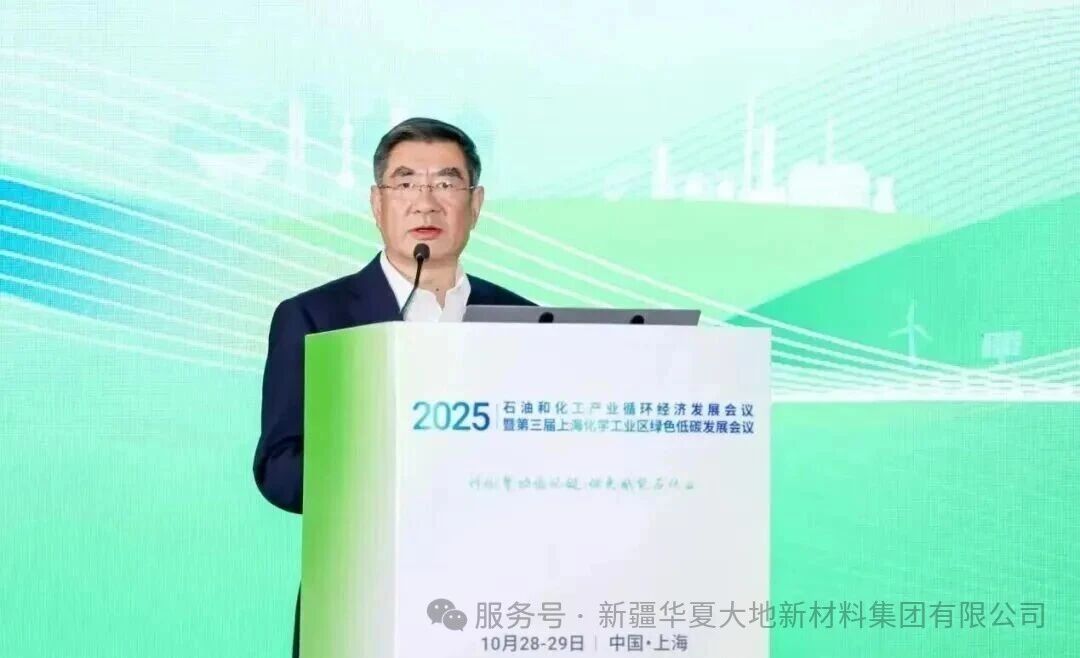
On October 28, 2025, the "2025 Petroleum and Chemical Industry Circular Economy Development Conference and the Third Shanghai Chemical Industrial Zone Green and Low-Carbon Development Conference" was held in Shanghai. Vice President Fu Xiangsheng of the China Petroleum and Chemical Industry Federation was invited to attend and deliver a keynote speech. He focused on sharing with the attending representatives the development and future trends of the circular economy and bio-based chemicals. The main content of the report is edited as follows and is provided for the reference of industry colleagues.
I. What is Circular Economy?
The concept of circular economy originated in the United States in the 1960s. It emerged due to the influence of several events and environmental crises.
The emergence and birth of the concept of circular economy.
One reason was inspired by the popular science book "Silent Spring" published in 1962 by the American ecologist Rachel Carson. The book mainly described the environmental pollution and ecological damage caused by excessive use of chemical substances and fertilizers, ultimately leading to a catastrophic burden for humanity; it pointed out the dangers faced by the biological world and humanity, and called on people to seriously consider the development issues of human society and awaken their awareness of environmental protection.
The second inspiration came from a photograph. On December 7, 1972, the astronauts of Apollo 17 took a photo of the Earth. From the perspective of space (at that time, Apollo 17 was facing away from the sun), the Earth looked like a marble. It was thus named "The Blue Marble". This was the first time that humans had taken a clear photo of the Earth's illuminated side from space. Inspired by this, people began to think that the Earth in space is like a spaceship, relying on constantly consuming its limited resources to survive. If resources are not developed rationally and the environment is not protected, it will face the same fate as a spaceship and eventually perish.
The third factor was the impact of the "Black Storm" in the western United States. On the morning of May 11, 1934, an unprecedented black storm occurred in the grasslands of the western United States. The strong wind lasted for three days and three nights. Wherever the storm passed, the streams dried up, crops withered, and livestock died of thirst. Thousands of people were left homeless. This was due to the continuous expansion of farmland and the continuous deforestation, which led to severe soil erosion and intensified the phenomenon of land desertification. The attack of the black storm had a serious impact on the agricultural production in the United States, causing large areas of wheat to wither, which led to fluctuations in the grain market in the United States at that time and impacted economic development. This was a historic punishment from nature to human civilization.
Fourth, it was influenced by the Minamata incident in Japan. In 1939, the Japanese ammonium fertilizer company in Minamata began to produce vinyl chloride, using a mercury-containing catalyst, which led to a large amount of mercury being present in the wastewater. This mercury was absorbed by the fish in the water and consumed by the residents of Minamata. As a result, mercury accumulated in the human body, causing a strange disease. At first, it was manifested as slurred speech and unsteady walking. Then, there was facial dementia, numbness throughout the body, deafness and blindness. Eventually, it led to mental disorders, and they died by bending over and screaming. Later, the international community established the "Minamata Convention" to control and reduce mercury pollution.
The fifth factor was influenced by the smoke incident in Oita City, Japan. Oita City is located in the eastern bay of Japan. In 1955, more than ten petrochemical plants were successively built there. The SO₂-containing gases and dust emitted by these chemical plants all day long made the formerly clear sky become extremely polluted. Starting from 1961, respiratory diseases occurred in this area and spread rapidly. In 1964, there was a period of three days when the smoke did not disperse. Many asthma patients died as a result. The main reason was that the annual emissions of SO₂ and dust in Oita City reached 130,000 tons, and the concentration of SO₂ in the atmosphere exceeded the standard by 5-6 times. A thick smoke formed, containing harmful gases and metal dust, which interacted to produce substances such as sulfuric acid.
In addition, it was also affected by events such as the Los Angeles Fog Incident in 1943 and the Donora Sulfur Dioxide and Acid Rain Incident in the United States in 1948.
Next, I will focus on the most significant event of 1952, the "London Fog Incident". London has long been known as the "Fog City" of the world. Every time in spring and autumn, this city is often shrouded in thick fog, as if it is covered by a mysterious veil. Since the end of the 18th century with the Industrial Revolution, the fog has become increasingly severe. After the Industrial Revolution, the amount of coal used in major British cities has sharply increased. The power generation of cities relied on coal, the power of trains relied on coal, factories relied on burning coal for production, and residents' households also relied on burning coal for heating, which led to the "London Fog Incident", one of the top ten environmental disasters of the 20th century, in December 1952. Starting from December 4th, continuous thick fog lasted for nearly a week. The smoke and gases emitted by factories and households accumulated in the lower atmosphere in large quantities, and the entire city was shrouded in fog, plunged into a gloomy state. On the morning of December 5th, fog appeared in London, and in the afternoon, the fog gradually turned yellow. That night, the fog gradually thickened, visibility became only a few meters, the beautiful Thames Valley was covered by fog, and the workers on the Thames River boats were crying non-stop due to the fog. Some residents said they couldn't see their own feet when walking. Apart from the London Underground, London's transportation almost came to a standstill. Ships on the Thames River were forced to stop, double-decker buses could only move slowly in the city center with the help of fog lights, traffic guides held flashlights or torches to guide public buses to move slowly; people driving in the city not only turned on their headlights but also extended their heads out of the windows, carefully observing the front, and moved slowly. The health of the citizens was also severely affected. Many citizens experienced discomfort such as chest tightness and suffocation, and the incidence and mortality rates increased sharply. According to statistics, more than 4,700 people died from respiratory diseases during this period, and another 8,000 people died tragically after the fog dissipated; the number of patients with respiratory symptoms such as asthma and cough increased significantly, the number of deaths due to bronchitis was 9 times that of normal times, the number of deaths due to coronary heart disease was 2.4 times that of normal times, and the number of deaths due to tuberculosis was 5.8 times that of normal times. This was the world-shocking "Fog City Catastrophe". Since that fog incident, the UK began to pay attention to environmental protection. In 1995, the UK passed the "Environmental Law", requiring the formulation of a national strategy for pollution control, and requiring the industrial sector, transportation management departments, and local governments to work together to reduce the emissions of eight common pollutants such as carbon monoxide.
Inspired by these events, especially the impact of the environmental crisis, people not only saw the excessive dependence of the traditional economy on resources and the negative effects it had on humans and the environment, but also realized that the Earth's resources are not inexhaustible and unlimited, and the Earth's environment is not of unlimited capacity. It is limited by its capacity for accommodation and restoration, and is also very fragile. At the same time, people's environmental awareness was awakened, and they realized that unrestrained extraction from nature and unrestrained discharge into the environment would eventually lead to self-retribution for humanity, and even self-destruction. People began to recognize the importance of "circular economy". In 1972, countries signed the "Human Environment Declaration" in Stockholm. Since the 1980s, transforming traditional development concepts and developing circular economy have gradually become an important trend and consensus in the international community. Developed countries have regarded developing circular economy as an important way to leverage their national strategic advantages and also as an important means to enhance their competitiveness in the global market.
2. The concept of "circular economy".
The concept of circular economy was first proposed by American economist K. Polidin in the 1960s: within the large system consisting of people, natural resources and science and technology, throughout the entire process of resource input, enterprise production, product consumption and its disposal, the traditional linear growth economy that relies on resource consumption should be transformed into an economy that develops based on ecological resource circulation. The newly promulgated "Economic Circulation Promotion Law of the People's Republic of China" in June 2025 by our country defines: Circular economy refers to the general term for activities such as reduction, reuse and resource utilization carried out in the processes of production, circulation and consumption. In the "Circular Economy Development Plan for the 14th Five-Year Plan" issued by the National Development and Reform Commission in 2021, it is clearly stated that circular economy is an economic growth model centered on the efficient and circular utilization of resources, based on the principles of "reduction, reuse and resource utilization", with low consumption, low emissions and high efficiency as its basic characteristics, and in line with the concept of sustainable development. It is a fundamental transformation of the traditional growth model of "mass production, mass consumption and mass disposal".
3. Our country's emphasis on the circular economy.
After China's reform and opening up, its economy has developed rapidly. At the same time, the understanding of economic development, social development, technological progress, and the country's resource endowment and environmental constraints has deepened continuously. The development concepts have been increasingly in line with international standards. Since the 1990s, circular economy development has been highly valued. Since the new century, in response to the prominent contradiction in China after decades of sustained rapid development, where resources are relatively scarce but are consumed in large quantities, in order to break through the bottlenecks of resources and the environment on economic development and promote the orderly development of circular economy, in 2021, the National Development and Reform Commission issued the "Circular Economy Development Plan for the 14th Five-Year Plan Period", setting clear development goals: by 2025, the output rate of main resources will increase by approximately 20% compared to 2020, unit GDP energy consumption and water consumption will be reduced by about 13.5% and 16% respectively, the comprehensive utilization rate of bulk solid waste will reach 60%, and the output value of resource recycling industries will reach 5 trillion yuan. At the same time, three key tasks were planned and deployed: first, to build a resource circular industry system and improve resource utilization efficiency; second, to build a waste recycling system and build a resource circular society; third, to deepen the development of agricultural circular economy and promote sustainable development of agriculture and rural areas.
In February 2024, the General Office of the State Council issued the "Opinions on Accelerating the Construction of a Waste Recycling and Utilization System", further detailing the goals and paths for waste recycling. It particularly emphasized adhering to the circular economy concept of "reduction, reuse, and resource utilization", aiming to enhance resource utilization efficiency. The approach involves precise management of waste, effective recycling, and efficient utilization, covering all aspects of production and life, developing the resource recycling industry, and establishing an incentive and restraint mechanism, in order to lay a green and low-carbon foundation for high-quality development.
In June 2025, the "People's Republic of China Circular Economy Promotion Law" was newly promulgated, clearly stating that developing a circular economy is a major strategic goal for the country's economic and social development. Since the 18th National Congress of the Communist Party of China, China has vigorously implemented circular production methods, promoted green lifestyles, strengthened the recycling of key types of resources, effectively managed the entire chain of plastic pollution, controlled excessive packaging of goods, and actively carried out international cooperation in circular economy. All these efforts have achieved remarkable results.
II. The Differences between Circular Economy and Traditional Economic Models and the "3R" Concept for Developing Circular Economy
The first industrial revolution brought the industrial economy into a period of rapid development, the second industrial revolution pushed it into a large-scale era, and the third industrial revolution led it into a modern era. Currently, we are experiencing the fourth industrial revolution marked by artificial intelligence.
The drawbacks of the traditional economic model in the early stage of industrialization.
During the period when the first industrial revolution spurred the rapid development of traditional industries, people at that time believed that the Earth's resources were infinite, inexhaustible and unlimited. The production concept of the traditional industrial economy at that time was to maximize the exploitation and utilization of natural resources, maximize the creation of social wealth, and maximize the acquisition of profits. At that time, the acquisition and exploitation of natural resources by people were unrestricted, the consumption and production of resources were unrestrained, and the waste water, waste gas and waste residue generated during the production process were discharged, discarded or piled up in the environment without any restrictions. As a result, after nearly a hundred years of unrestrained rapid development, the damage caused to the environment, ecology and humanity reached an intolerable level. Pollution incidents occurred frequently in developed countries such as Europe and America. The black storm in the western United States, the London smog incident and the Minamata incident in Japan, etc., are all typical cases. Similar environmental harm incidents and health hazards caused to people occurred frequently in the early industrialized countries and regions of Europe and America in the late 19th century and the first half of the 20th century.
2. The differences between traditional economy and circular economy. The production model of traditional economy is resource - product - waste emission, and its consumption model is product - consumption - waste emission. Both belong to the economic model with unidirectional material flow. This unidirectional model disposes all waste residues, wastewater, waste gas, household garbage and other pollutants without any treatment, randomly into the environment. The traditional industrial economy, which only considers economic benefits and does not take into account the scarcity of resources and environmental capacity, often uses resources in a rough and one-time manner. It achieves quantitative economic growth by continuously turning resources into waste, resulting in many shortages and depletion of natural resources and causing disastrous environmental pollution consequences. The more wealth created by the traditional economic model, the more resources consumed, the more waste generated, and the greater the negative impact on environmental resources, and the more serious the harm to humans and society.
The circular economy is a closed-loop economy of "resources - products - recycled resources - recycled products", forming a reasonable closed cycle. By consuming the minimum amount of resources, producing more products, minimizing waste generation, and reducing environmental impact, the economic activities can control their impact on the natural environment to the lowest possible degree. That is, by developing the circular economy, we can break away from the traditional industrial economy's "overproduction and overconsumption" trap. We can change the traditional economic model of "resources - products - pollution emissions", which is a one-way flow of materials, and achieve an economic development model where materials are continuously recycled. We can build a process of material circulation flow of "resources - products - recycled resources", so that the entire economic system and the process of production and consumption basically do not produce or produce very little waste.
3. The "3R" concept of the circular economy. These include the principles of reduction (Reduce), reuse (Reuse), and recycling (Recycle).
The concept of "Reduction" requires that in the process of economic growth, in order to ensure that this growth has sustainable and environmentally compatible characteristics, people must fully consider saving resources and improving the utilization rate of resources per unit product from the source of production, rather than focusing on the treatment of waste after its generation. How to achieve reduction? For the production process, enterprises can reduce the raw material consumption and pollutant emissions per unit product through technological transformation, adopting advanced production processes, or implementing clean production. Another manifestation of reduction is the miniaturization and lightweighting of products, as well as simple and plain packaging rather than luxurious and wasteful packaging, which can all be achieved by paying attention to saving resources and reducing pollution from the source of economic activities.
By applying the "Reuse" concept, it is required to use products and packaging materials (containers) as much as possible in multiple ways or in various forms. They should be reused in their original form, and the usage period of the products should be extended as much as possible, rather than being updated very quickly to prevent items from becoming garbage prematurely. Reusing items like tableware, backpacks, and cloth bags is an embodiment of the "Reuse" concept. Regenerating and reusing waste catalysts, disassembling and repairing used and broken items, and using fewer or no disposable products, as well as resisting the proliferation of disposable products, are all manifestations of the "Reuse" concept.
The concept of resource utilization (Recycle) requires as much reutilization or recycling as possible. Through reprocessing (recycling) of "waste", it is transformed into resources and used to produce new products that enter the market or the production process again, thereby reducing the generation of waste. There are two types of resource utilization: The first is primary resource utilization and recycling, where waste is recycled to form new products identical to the original ones, such as using waste paper to produce recycled paper, and using waste steel to produce steel. The second is secondary resource utilization, which is a recycling process where waste is used as raw materials to produce other products with different properties. In the petrochemical field, developing circular economy involves both primary resource utilization and secondary resource utilization. We call this "physical circulation and chemical circulation".
The "3R" concept advocates reducing resource and energy consumption at the source. During the production process, the least amount of raw materials and energy is used to produce the predetermined products. In the consumption and usage stages, it also promotes multiple uses, reducing or refusing single-use items. Even waste or by-products from the production process are encouraged to be recycled and reused, in order to save resources and protect the environment.
III. Circular Economy and Bio-based Chemicals
The petrochemical industry has unique advantages in developing a circular economy. The petrochemical sector has long recognized that the circular economy is the most practical path for the petrochemical industry to achieve green and low-carbon development, because the magic of chemical reactions lies in the wide range of raw materials.
The circular economy in the petrochemical industry started early and achieved good results.
With the second industrial revolution, the inception of synthetic chemistry can be regarded as a typical case of the circular economy. At that time, steel production required coke, and the coking process produced a large amount of coal tar. Bayer and BASF were born using coal tar, a by-product of the steel industry, as raw material to artificially synthesize dyes. It is no exaggeration to say that this invention directly gave birth to the modern chemical industry. Today, the recycling of calcium carbide slag to produce cement, the co-production of phosphogypsum to recycle cement and recover sulfur for acid production, as well as the substitution of coke and tail gas from calcium carbide furnaces for coal to produce synthetic gas for methanol production, the development of a carbon-1 chemical industry chain, the recovery of fluorine from aluminum slag and phosphogypsum to produce hydrogen fluoride, etc., all these recycling models have achieved very good results.
The current most pressing issue is the recycling of a large amount of waste plastics. Physical recycling allows for reuse: such as packaging containers (boxes), pallets, etc. It can also achieve multi-level utilization and reduce the use of new plastics, for example, recycling waste plastics to manufacture car bumpers, park walkways, benches, and scenic walkways, etc.
The chemical recycling process can re-cycle and synthesize new chemicals and materials through various methods such as cracking (thermal cracking, catalytic cracking), depolymerization (alcoholysis, hydrolysis, etc.), gasification, etc. For example, recycled PET can be depolymerized to recover polyester monomers, which can then be recycled and polymerized to form new PET. Mixed plastics can be decomposed to obtain cracking oil with naphtha as the main component. This cracking oil can be obtained from a cracking furnace and used to obtain new monomers such as ethylene and propylene. These monomers can then be further synthesized into more organic chemicals and polymer materials. Another way of chemical recycling is to gasify mixed plastics in a gasification furnace to obtain synthesis gas with carbon monoxide and hydrogen as the main components. This synthesis gas can then be further synthesized into chemicals such as methanol and ammonia. Methanol can be converted into various chemicals or high-molecular materials through carbon-one chemistry (such as acetic acid, formic acid, carbonate, DMF, etc. through carbonylation reactions, and methanol oxidation to polyoxymethylene for engineering plastics, methanol to olefins, etc.). Ammonia can be used for fertilizer production, etc. Regardless of which recycling method is used, it significantly reduces the extraction of petroleum, natural gas, coal, phosphate rock, sulfur iron ore, fluorite ore, and carbonate.
2. The utilization of biomass resources is a crucial issue in the circular economy, and it is also an important direction of innovation and development that is currently receiving significant attention both domestically and internationally.
Whether it is plant straw or lignocellulose, they can all be transformed into bio-based chemicals and bio-based materials through biotechnology. Waste biomass resources can also be gasified to synthesize methanol and numerous products in its downstream chain. Therefore, in the transformation and upgrading of the petrochemical industry, the important issue of recycling biomass resources must not be overlooked. Because, just like through chemical synthesis pathways using fossil resources such as oil, natural gas, and coal as raw materials, through the biotechnological path using biomass as raw materials, any known chemicals and synthetic materials can be obtained.
First, what are bio-based chemicals? Let's take a look at fossil-based chemicals. Fossil-based products refer to chemicals or materials obtained through chemical reaction processes or polymerization techniques using petroleum, natural gas, or coal as raw materials. On the other hand, bio-based products refer to chemicals and synthetic materials obtained by biological manufacturing (synthesis, processing, refining) using biomass as the raw material. Bio-based materials refer to materials produced from biomass through biological or chemical methods. Currently, there are bio-based plastics (polyolefins, nylon, etc.), bio-based fibers (polyester, spandex, nylon 56, etc.), bio-based rubbers (dandelion rubber, eucommia rubber, etc.), and so on. Among them, biodegradable materials are a very important category because they possess characteristics that traditional fossil-based materials do not have, such as being green, environmentally friendly, having renewable raw materials, and being degradable. Biodegradable plastics are widely used in disposable packaging materials, tableware, and plastic films, while bio-based fibers (PLA, PTT, PA56, PA11, etc.) have been applied in fashion, home furnishings, outdoor products, and industrial fields. Biomass energy uses biomass as raw material for power generation through combustion or biochemical conversion to produce biofuels (bioethanol, biodiesel, biojet fuel, biogas, bio-methanol, etc.). Because biomass is a renewable, recyclable, green, and low-carbon raw material, it can be regenerated through photosynthesis of plants, has abundant resources, and can ensure the sustainable supply of resources. Moreover, biomass can effectively reduce greenhouse gases such as nitrogen dioxide and sulfur compounds. In recent years, it has attracted much attention.
Secondly, what are the types of biomass raw materials? Biomass raw materials generally include grains, sugarcane, cassava, plant seeds and plant stalks, reeds, lignocellulose, microalgae, waste oils, etc. To obtain chemicals or synthetic materials from biomass, generally, biological fermentation, biological enzyme conversion, and biological catalysis technologies are required, which is commonly referred to as the biological manufacturing process. For example, grains (cassava) can undergo starch and glucose through biological fermentation or enzyme conversion processes to obtain vitamins, bioethanol, bio-based polyols (1.3-propanediol, 1.4-butanediol, glycerol, etc.), bio-based diacids (1.4-butyric acid, adipic acid, etc.), diamines (pentanediamine, the monomer of nylon 56), etc.; grains (cassava) can be processed through starch and glucose or algae through biological technology to obtain high-end fine chemicals such as medicines, health care products, food additives, as well as biodegradable materials such as polylactic acid, PBS, and new materials such as bio-based nylon 56; grains (cassava) can undergo starch and sugar fermentation to obtain bio-based ethanol, and bio-based ethanol can be dehydrated to obtain bio-based ethylene, and using this as a raw material, a series of bio-based organic chemicals and bio-based polymers such as polyethylene and EVA can be obtained. The 1.3-propanediol mentioned above by DuPont through the biological method is the monomer of the new polyester PTT, 1.4-butanediol is an important monomer for engineering plastics PBT, spandex, and biodegradable materials PBS, PBAT, etc., 1.4-butyric acid is an important monomer for the biodegradable material PBS, adipic acid is an important monomer for bio-based nylon 66; plant seeds such as castor beans, through castor bean oil, can be polymerized to obtain high-performance biodegradable nylon materials with long carbon chains such as nylon 11, 1010, 10T, etc., and so on.
Third, the difference between biobased materials and biodegradable materials. These two terms cannot be equated. That is, biobased materials are not necessarily biodegradable, and biodegradable materials are not necessarily biobased. In other words, some biobased materials are biodegradable while others are not. For example, biobased polylactic acid obtained from starch in grains or plant straw through biological methods is a biodegradable material when in a composting state; while biobased ethanol obtained from starch in grains or plant straw through biological fermentation, and then dehydration to obtain biobased ethylene, when polymerized with the process conditions of naphtha or light hydrocarbons as raw materials, the resulting polyethylene material is completely the same but is not biodegradable. The same principle applies to biobased ethylene obtained by oxidation hydration to obtain biobased ethylene glycol, and then reacting with phthalic acid ester to obtain PET, which is a biobased polyester and also not biodegradable. Currently, in the United States, Brazil, South Korea, Japan, etc., innovative technologies have been developed to obtain biobased propylene from biobased ethanol, and the polymer obtained from this process is also not biodegradable. Therefore, biobased materials are not necessarily biodegradable.
How can we understand that "biodegradable materials are not necessarily biobased"? We all know that many polymers obtained from fossil resources, such as polyolefins, polyesters, polyurethanes, synthetic fibers, etc., are not biodegradable. However, some familiar fossil resource-based polymers are biodegradable materials, such as PBS (polybutylene succinate). Its two monomers are 1.4-butanediol (mainly produced in China through the calcium carbide-acetylene route via the acetaldehyde process or the carbon 4 route via oxidation and hydrogenation) and 1.4-butanedioic acid (currently mainly produced by the hydrogenation of adipic acid). After polymerization, the PBS obtained from fossil resources is a biodegradable material. Similarly, PBAT and PBST, which are also produced from fossil resources, are also biodegradable. Therefore, biodegradable materials are not necessarily biobased.
3. Biotechnology is an important direction and a promising future for the petrochemical industry.
According to the OECD's prediction, at least 20% of petrochemical products can be replaced by bio-based products in the next 10 years; the EU's "Vision for Industrial Biotechnology" predicts that by 2030, bio-based raw materials will replace 6%-12% of chemical raw materials and 30%-60% of fine chemicals.
With continuous innovation and the continuous advancement of technology, biotechnology will become increasingly mature, the manufacturing process will become more refined, and its economic viability will gradually improve. Biomanufacturing will bring disruptive and revolutionary results to the traditional petrochemical industry. An independent research institution based in Germany recently released "Bio-Based Basic Raw Materials and Polymers - Global Capacity, Production and Trends from 2024 to 2029", which not only affirmed that 2024 was a year of "remarkable performance" for bio-based polymers, but also pointed out that it will continue to grow in the coming years. It is expected that the compound annual growth rate will reach 13% before 2029. Among them, bio-based degradable polymers are expected to have an annual growth rate of up to 17%, and the space for capacity release and market expansion will be greater. By 2029, Asia and North America will dominate the production and supply of global bio-based polymers, with both accounting for more than 80% of the global supply of bio-based polymers. At that time, the share of Europe will be approximately 10%. The global production of bio-based polymers in 2024 was 4.2 million tons. Cellulose acetate and epoxy resin accounted for 26% and 32% of bio-based polymers respectively, followed by bio-based polyurethane, polylactic acid, polyamide and PTT. Among them, fully bio-based polylactic acid has good biodegradability and mechanical properties and is widely used in packaging and medical fields, accounting for 8%. It is expected that the growth rates of global bio-based polypropylene, polyhydroxyalkanoates, and polyphthalic acid furfural glycol esters will be particularly prominent before 2029, with an average annual growth rate of up to 65%. Among them, the growth of polyhydroxyalkanoates is mainly in Asia, the growth of polyphthalic acid furfural glycol ester is mainly in Asia and Europe, and the growth of bio-based polypropylene capacity is mainly in North America. Driven by green and low-carbon, climate change response and sustainable development, bio-based polymers will usher in new development opportunities. Asia, with its production capacity and technological innovation, will lead the strong growth of bio-based polymers. Of course, bio-based polymers also face technical bottlenecks, cost control, and recycling and circularity challenges. Currently, it is difficult to compete with fossil-based polymers.
The United States and Europe have positioned biomanufacturing as a key area in the "21st Century Economic Sovereignty Struggle". In recent years, the United States has successively released multiple plans and strategic policies such as the "Biomass Economy Implementation Framework", the "2020 Biomass Economy Research and Development Act", and the "Clear Goals for the Development of American Biotechnology and Biomanufacturing". These policies aim to revitalize the American biomass economy and develop the bio-based materials industry, with the intention of controlling the advantages of the entire industrial chain of biotechnology and biomanufacturing. Europe has actively promoted research framework plans such as "Horizon Europe", systematically conducting innovations in the field of biomanufacturing. Germany passed the "National Biomass Economy Strategy" to actively promote the application of synthetic biotechnology in the industrial sector. European multinational companies such as BASF, Evonik, DSM, Solvay, Arkema, as well as energy companies such as Total, Shell, and BP, have achieved significant results in innovation and industrialization in biomanufacturing, biomass energy, etc. Multinational companies such as DuPont, Dow, Mitsubishi Chemical, Idemitsu, and LG have increased their layout in areas such as bio-based propylene glycol and its fibers, bio-based acrylic acid and its esters, bio-based polycarbon, bio-based nylon, and biodegradable polylactic acid. The competitive landscape in the global biomanufacturing field will gradually take shape.
Our country has always attached great importance to the innovation in biotechnology and biomanufacturing. Since the 1980s, biocatalysis and chemical engineering, as well as chemical new materials and fine chemicals, have been listed as the "three major innovation priorities". In 2023, the strategic emerging industries sector focused on the layout of biomanufacturing. In 2025, at the Fourth Plenary Session of the 20th Central Committee of the Communist Party of China, it was proposed to focus on the forward-looking layout of biomanufacturing as a key area for future industries. Our country will concentrate on organizing strategic scientific and technological forces to focus on key breakthroughs for the construction of a modern industrial system.
4. Technological innovation in biobiochemical engineering.
The first generation of biobased chemical technology involves converting food - starch - glucose - bio-based chemicals or materials, using sources such as sugarcane and cassava; the second generation technology involves plant straws (containing lignocellulose and waste biomass). The third generation technology uses raw materials such as seaweed and carbon dioxide. The first generation has mature industrial technologies and production facilities, such as large-scale production of biomass ethanol in the United States, Brazil, and China, and biodegradable materials like polylactic acid produced by China, Europe, and other regions; various vitamins, food and feed additives produced by China, Europe, and other regions.
The second-generation technology is currently in the stage of industrial demonstration. Both China and Europe have large-scale demonstration facilities (such as the one operated by China Investment Corporation in Heilongjiang) that use plant straw as raw material to produce bioethanol. In China, using plant straw as raw material to produce biodegradable material polylactic acid has also established a large-scale demonstration facility (Fengyuan in Anhui). Therefore, it can be said that China is at the leading edge in the second-generation technology.
Most of the third-generation technologies are still in the research stage in laboratories. If the technologies for marine algae cultivation and the production of fuels and chemicals from algae can be successfully implemented, and if they are both mature and economically viable, then the petrochemical industry will no longer be constrained by fossil raw materials. China has made good progress in seaweed cultivation and the production of bio-nutrients and synthetic biofuels.
The first-generation technology of biomass fuel involves synthesizing bio-based fatty acid methyl esters using starch-bioethanol or palm oil, rapeseed oil, soybean oil, etc. as raw materials. The supply radius of the raw materials is generally 100 kilometers. Currently, it is affected and restricted by the stability of biomass raw material supply and different types of biomass raw materials. The new generation of biomass fuel technologies include biomass gasification or waste plastic gasification, syngas-to-biofuel synthesis, biofuel synthesis from food or plant straw through biomass ethanol, and all of these are in the research and development process.
5. Currently, there are two important biomass products.
One is bioethanol. Bioethanol can not only be directly added to gasoline as a biofuel, but also serves as the raw material for synthesizing bio-based ethylene and other bio-based chemicals and bio-based materials. Brazil, the United States, and Europe are the three major bioethanol production regions in the world. The raw materials for the first-generation bioethanol are wheat, corn, sugarcane, and sugar beets. According to statistics from the German Chemical Technology and Biotechnology Society, 37% of the raw materials for bioethanol in Europe are corn, 33% are wheat, and 20% are sugar beets. Due to the issue of competing with humans for food, the production of the first-generation bioethanol is restricted.
The second-generation biofuels are made from plant stalks and lignocellulose and are now entering the industrial demonstration stage. Brazil is accelerating the development of the second-generation fuel ethanol, namely cellulose ethanol. In Brazil, it uses the residues of sugar cane ethanol or the residues and waste from the sugar production process as raw materials, which is a cleaner fuel with lower carbon emissions. The advantage of the second-generation ethanol is that it can increase the ethanol production by 50% without increasing the area for raw material cultivation, and its carbon footprint is 30% lower than that of the first-generation ethanol and 80% lower than that of regular gasoline.
Brazil is at the forefront of the research and application of the second-generation ethanol, which meets the needs of the global energy transition in the context of the climate crisis. Through the "Future Fuels" bill, Brazil has accelerated the production of the second-generation bioethanol to meet the demand for renewable energy. With technological advancements, the production capacity of the second-generation ethanol plants that have been put into operation in Brazil is gradually increasing, and the construction scale is expanding. The Reis Energy in Brazil has announced the construction of 9 second-generation ethanol plants, and will plan to build another 11 in the future, with a total annual production capacity of up to 1.6 million tons. In addition to supplying the domestic market in Brazil, it will also export second-generation ethanol to countries and regions such as the United States, Europe, and Asia in the future.
Bioethanol can not only be directly used as fuel, but also can be dehydrated to produce ethylene, from which organic chemicals and polymers such as polyethylene can be obtained. There have been reports that American biotechnology companies and chemical manufacturers have collaborated with Rumus to develop technologies for dehydrating ethanol to produce propylene and all-biobased polypropylene, with a proposed construction scale of 1.5 million tons per year. LG Corporation of South Korea and Braskem of Brazil are also researching technologies for dehydrating bioethanol to produce propylene and polypropylene. At present, the technology is basically mature, but the cost issue needs to be verified. In September 2025, Sumitomo Chemical conducted a pilot test for directly converting ethanol to propylene, using agricultural waste or bioethanol derived from cellulose as the raw material. Sumitomo's goal is to commercialize operations by 2030.
The biotechnology industry will become a crucial leading industry in the 21st century. It will be the key point of the new round of technological revolution and industrial transformation and the dominant position in the global competitive landscape. In particular, non-food biobased products will be the focus of innovation and development. Currently, bioethanol mainly uses sucrose and starch as raw materials, but in the future, it will mainly shift to plant straw and other lignocellulosic materials as raw materials. In terms of carbon emissions, the carbon emission of fossil raw material ethanol is twice that of bioethanol. The carbon emission of sugar beet as the raw material is the lowest, and the carbon emission of wood is higher than that of sugar beet. From an economic perspective, the cost of bioethanol mainly depends on the price of biomass raw materials, as the price of biomass raw materials accounts for 55% - 80% of the price of ethanol.
The second type is bio-methanol.
Similar to the coal-based methanol production process, the main steps involve pre-treatment of biomass raw materials, which mainly involves removing moisture and then undergoing gasification to obtain syngas, followed by a synthesis reaction to produce methanol. In 2012, the world's first biomass-based methanol plant was built in Sweden, using forest waste as the raw material to produce 100,000 tons of fuel-grade methanol per year, with an efficiency of 66%-72%. The wood consumption per unit is 2.6 tons of dry wood residue, and the energy consumption is more than 10% higher than that of natural gas methanol; the carbon emissions of producing methanol from forest residues are 0.56 tons per ton of methanol, while those of natural gas methanol are 0.84 tons per ton of methanol. Its economic efficiency, with the raw material cost accounting for approximately 60%-70%, so the price of biomass raw materials is the determining factor. The cost of biobutanol is at least 1.5 times higher than that of natural gas butanol. Another process route for biobutanol is that domestic waste or agricultural residues are converted into biogas, which is then used to produce syngas and then synthesized into methanol. With biobutanol, as mentioned earlier, a series of bio-based chemicals can be obtained through the carbon-1 chemical process, and a series of bio-based polymer materials can be obtained by converting methanol into olefins.
In the fields of bioethanol, biomethanol, bioethylene glycol, biodegradable polylactic acid, bio-based butyrolactone, butyric acid, as well as bio-based olefins, bio-based polycarbonates, bio-based polyesters, bio-based polyurethanes and bio-rubber (dandelion rubber, eucommia rubber), our country is at the world's leading level.
Circular economy and bio-based chemicals are the main areas and innovation topics that both the world and China's petrochemical industry are focusing on. They are also important directions for the future development of the petrochemical industry. We hope that this exchange will bring you new thoughts and open up new paths for the green transformation and high-quality development of the petrochemical industry.
4. Technological innovation in biobiochemical engineering.
The first generation of biobased chemical technology involves converting food - starch - glucose - bio-based chemicals or materials, using sources such as sugarcane and cassava; the second generation technology involves plant straws (containing lignocellulose and waste biomass). The third generation technology uses raw materials such as seaweed and carbon dioxide. The first generation has mature industrial technologies and production facilities, such as large-scale production of biomass ethanol in the United States, Brazil, and China, and biodegradable materials like polylactic acid produced by China, Europe, and other regions; various vitamins, food and feed additives produced by China, Europe, and other regions.
The second-generation technology is currently in the stage of industrial demonstration. Both China and Europe have large-scale demonstration facilities (such as the one operated by China Investment Corporation in Heilongjiang) that use plant straw as raw material to produce bioethanol. In China, using plant straw as raw material to produce biodegradable material polylactic acid has also established a large-scale demonstration facility (Fengyuan in Anhui). Therefore, it can be said that China is at the leading edge in the second-generation technology.
Most of the third-generation technologies are still in the research stage in laboratories. If the technologies for marine algae cultivation and the production of fuels and chemicals from algae can be successfully implemented, and if they are both mature and economically viable, then the petrochemical industry will no longer be constrained by fossil raw materials. China has made good progress in seaweed cultivation and the production of bio-nutrients and synthetic biofuels.
The first-generation technology of biomass fuel involves synthesizing bio-based fatty acid methyl esters using starch-bioethanol or palm oil, rapeseed oil, soybean oil, etc. as raw materials. The supply radius of the raw materials is generally 100 kilometers. Currently, it is affected and restricted by the stability of biomass raw material supply and different types of biomass raw materials. The new generation of biomass fuel technologies include biomass gasification or waste plastic gasification, syngas-to-biofuel synthesis, biofuel synthesis from food or plant straw through biomass ethanol, and all of these are in the research and development process.
5. Currently, there are two important biomass products.
One is bioethanol. Bioethanol can not only be directly added to gasoline as a biofuel, but also serves as the raw material for synthesizing bio-based ethylene and other bio-based chemicals and bio-based materials. Brazil, the United States, and Europe are the three major bioethanol production regions in the world. The raw materials for the first-generation bioethanol are wheat, corn, sugarcane, and sugar beets. According to statistics from the German Chemical Technology and Biotechnology Society, 37% of the raw materials for bioethanol in Europe are corn, 33% are wheat, and 20% are sugar beets. Due to the issue of competing with humans for food, the production of the first-generation bioethanol is restricted.
The second-generation biofuels are made from plant stalks and lignocellulose and are now entering the industrial demonstration stage. Brazil is accelerating the development of the second-generation fuel ethanol, namely cellulose ethanol. In Brazil, it uses the residues of sugar cane ethanol or the residues and waste from the sugar production process as raw materials, which is a cleaner fuel with lower carbon emissions. The advantage of the second-generation ethanol is that it can increase the ethanol production by 50% without increasing the area for raw material cultivation, and its carbon footprint is 30% lower than that of the first-generation ethanol and 80% lower than that of regular gasoline.
Brazil is at the forefront of the research and application of the second-generation ethanol, which meets the needs of the global energy transition in the context of the climate crisis. Through the "Future Fuels" bill, Brazil has accelerated the production of the second-generation bioethanol to meet the demand for renewable energy. With technological advancements, the production capacity of the second-generation ethanol plants that have been put into operation in Brazil is gradually increasing, and the construction scale is expanding. The Reis Energy in Brazil has announced the construction of 9 second-generation ethanol plants, and will plan to build another 11 in the future, with a total annual production capacity of up to 1.6 million tons. In addition to supplying the domestic market in Brazil, it will also export second-generation ethanol to countries and regions such as the United States, Europe, and Asia in the future.
Bioethanol can not only be directly used as fuel, but also can be dehydrated to produce ethylene, from which organic chemicals and polymers such as polyethylene can be obtained. There have been reports that American biotechnology companies and chemical manufacturers have collaborated with Rumus to develop technologies for dehydrating ethanol to produce propylene and all-biobased polypropylene, with a proposed construction scale of 1.5 million tons per year. LG Corporation of South Korea and Braskem of Brazil are also researching technologies for dehydrating bioethanol to produce propylene and polypropylene. At present, the technology is basically mature, but the cost issue needs to be verified. In September 2025, Sumitomo Chemical conducted a pilot test for directly converting ethanol to propylene, using agricultural waste or bioethanol derived from cellulose as the raw material. Sumitomo's goal is to commercialize operations by 2030.
The biotechnology industry will become a crucial leading industry in the 21st century. It will be the key point of the new round of technological revolution and industrial transformation and the dominant position in the global competitive landscape. In particular, non-food biobased products will be the focus of innovation and development. Currently, bioethanol mainly uses sucrose and starch as raw materials, but in the future, it will mainly shift to plant straw and other lignocellulosic materials as raw materials. In terms of carbon emissions, the carbon emission of fossil raw material ethanol is twice that of bioethanol. The carbon emission of sugar beet as the raw material is the lowest, and the carbon emission of wood is higher than that of sugar beet. From an economic perspective, the cost of bioethanol mainly depends on the price of biomass raw materials, as the price of biomass raw materials accounts for 55% - 80% of the price of ethanol.
The second type is bio-methanol.
Similar to the coal-based methanol production process, the main steps involve pre-treatment of biomass raw materials, which mainly involves removing moisture and then undergoing gasification to obtain syngas, followed by a synthesis reaction to produce methanol. In 2012, the world's first biomass-based methanol plant was built in Sweden, using forest waste as the raw material to produce 100,000 tons of fuel-grade methanol per year, with an efficiency of 66%-72%. The wood consumption per unit is 2.6 tons of dry wood residue, and the energy consumption is more than 10% higher than that of natural gas methanol; the carbon emissions of producing methanol from forest residues are 0.56 tons per ton of methanol, while those of natural gas methanol are 0.84 tons per ton of methanol. Its economic efficiency, with the raw material cost accounting for approximately 60%-70%, so the price of biomass raw materials is the determining factor. The cost of biobutanol is at least 1.5 times higher than that of natural gas butanol. Another process route for biobutanol is that domestic waste or agricultural residues are converted into biogas, which is then used to produce syngas and then synthesized into methanol. With biobutanol, as mentioned earlier, a series of bio-based chemicals can be obtained through the carbon-1 chemical process, and a series of bio-based polymer materials can be obtained by converting methanol into olefins.
In the fields of bioethanol, biomethanol, bioethylene glycol, biodegradable polylactic acid, bio-based butyrolactone, butyric acid, as well as bio-based olefins, bio-based polycarbonates, bio-based polyesters, bio-based polyurethanes and bio-rubber (dandelion rubber, eucommia rubber), our country is at the world's leading level.
Circular economy and bio-based chemicals are the main areas and innovation topics that both the world and China's petrochemical industry are focusing on. They are also important directions for the future development of the petrochemical industry. We hope that this exchange will bring you new thoughts and open up new paths for the green transformation and high-quality development of the petrochemical industry.